Better questions before bigger decisions.
Telstar Digital works by moving from symptoms to causes, from evidence to judgement, and from judgement to a practical sequence of change. The aim is simple: know where spend is justified, where it is premature, and what must be true before it is safe.
Symptoms are not the same as causes. Diagnosis separates what is visible from what is actually driving the problem.
"Reporting is poor."
- 01 Numbers do not match across teams.
- 02 Teams define the same thing differently.
- 03 Systems and spreadsheets have evolved separately.
- 04 Process and data ownership are unclear.
The answer is not always another dashboard.
The real story rarely appears in a survey.
Surveys can show where people think the problem sits. Structured interviews expose why the problem persists: the workarounds, ownership gaps, informal controls, system frustrations and decision bottlenecks that rarely appear in dashboards or process maps.
Telstar uses interviews as a core diagnostic input, not a discovery ritual. Each conversation is shaped by the symptoms already visible in the business and anchored back to the Seven Pillars, so evidence can be compared across teams and traced into findings, recommendations and sequence.
The output is not a list of opinions. It is a structured view of what people said, what evidence supports it, where perspectives differ, and what that means for the next decision.
Month-end reporting takes too long.
Teams define the same measures differently.
Spreadsheet reconciliation, unclear ownership and inconsistent system records.
This is not primarily a dashboard issue. It is an operating truth issue.
The five-stage route is tested through seven operating lenses.
The method does not look at change through one lens. Each stage is tested across the seven areas that usually explain operational drag: what the business must do, how work flows, where truth sits, which systems are involved, how they connect, what can be automated, and where control is needed.
underpinned by
A repeatable diagnostic frame, not just opinion.
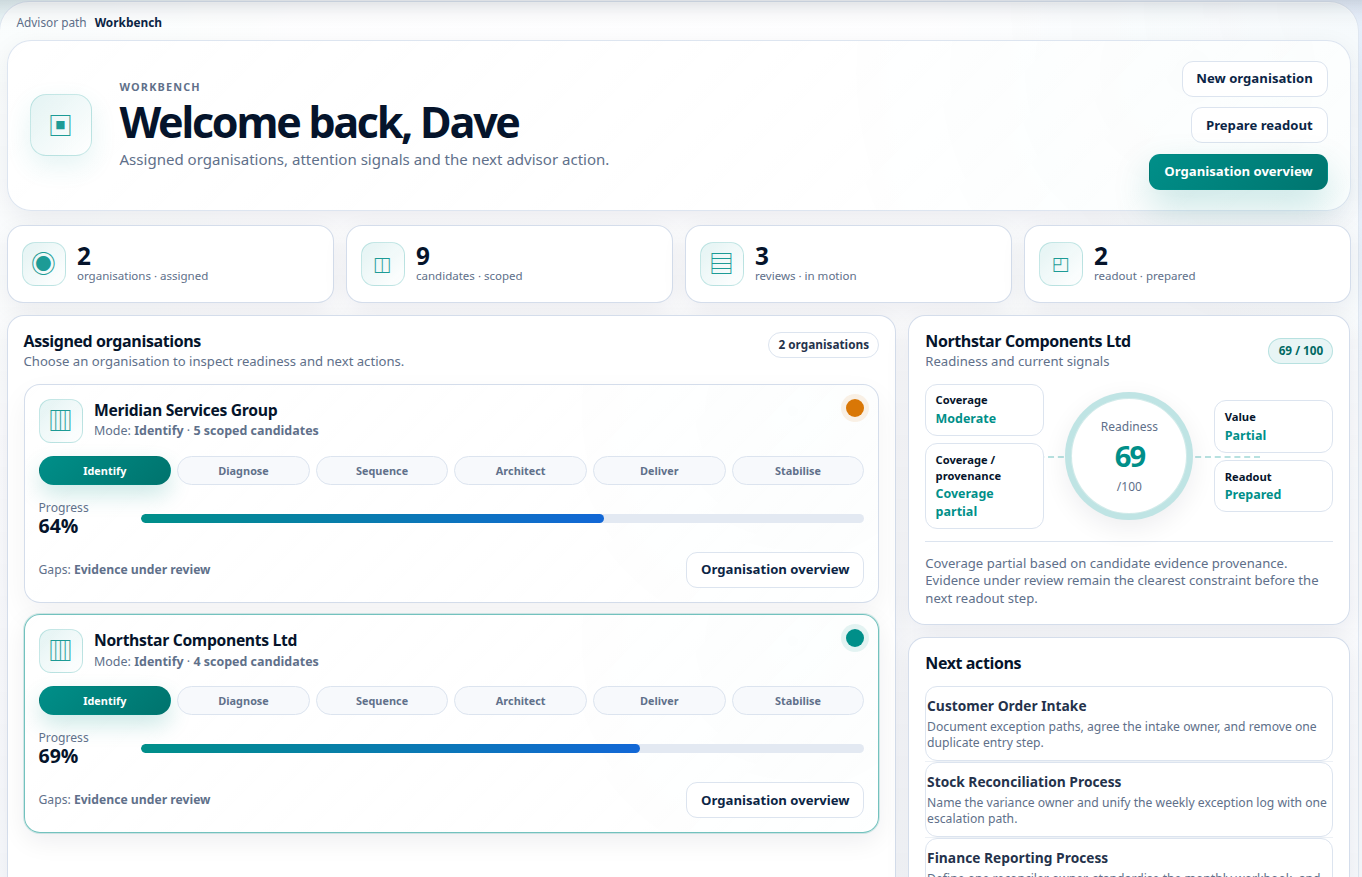
The software gives the advisory work structure: evidence is captured consistently, findings are linked back to sources, confidence is made visible, and recommendations can be traced to the issues they are meant to address.
Judgement still matters. The point is not to replace experienced thinking with a dashboard. The point is to make the diagnostic work more disciplined, more transparent and easier for leadership to trust.
Findings only matter when they improve the next move.
A diagnostic is not valuable because it produces observations. It is valuable because it changes what the business does next: what to fix, what to avoid, what to sequence, and where investment would actually help.
What supports the view.
What is actually wrong.
Why it matters.
What should change.
What happens first.
Want to understand what is really slowing the business down?
Everything on this page is the method inside a Focused Diagnostic Sprint. Start with the Mini Diagnostic, or speak to Telstar about running one. Either way, the aim is the same: get beyond symptoms and make the next move clearer.