Before You Spend on Change, Get Clear on the Problem
Growing businesses often commit to new systems, automation, AI or transformation programmes before they have diagnosed the structural problem they are trying to solve. The better first move is to map the reality of how the business works, identify the real sources of friction, and make the next investment decision from evidence rather than pressure.
A lot of change spend is wasted long before implementation begins.
It is wasted at the point where a business decides it needs to do something, but has not yet become clear on what the real problem is. The symptoms are usually visible enough. Teams are frustrated. Systems feel messy. Reporting takes too much manual effort. Delivery feels slower than it should. Customer handoffs are inconsistent. Leaders can see that the business cannot keep scaling in the same way.
The decision to act is understandable. The risk sits in what happens next.
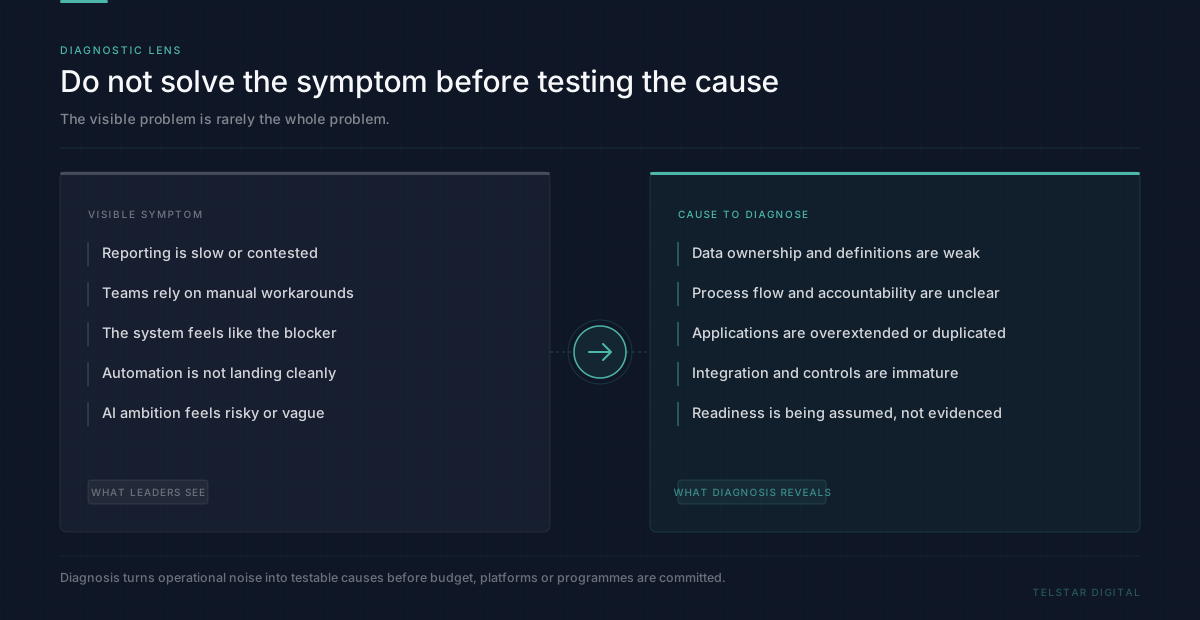
Many growing businesses move too quickly from operational pain to solution selection. A new platform is discussed. A transformation programme starts to take shape. A consultancy is asked to review systems. A shortlist appears. Demos are booked. Internal teams begin talking about implementation. From the outside, it feels as though progress is finally being made.
But activity is not the same as clarity.
When a business spends on change before it understands the problem, it can easily solve the wrong thing, solve the right thing in the wrong order, or solve only the visible part of a deeper structural issue. The result is familiar: more cost, more disruption, and not enough improvement to justify either.
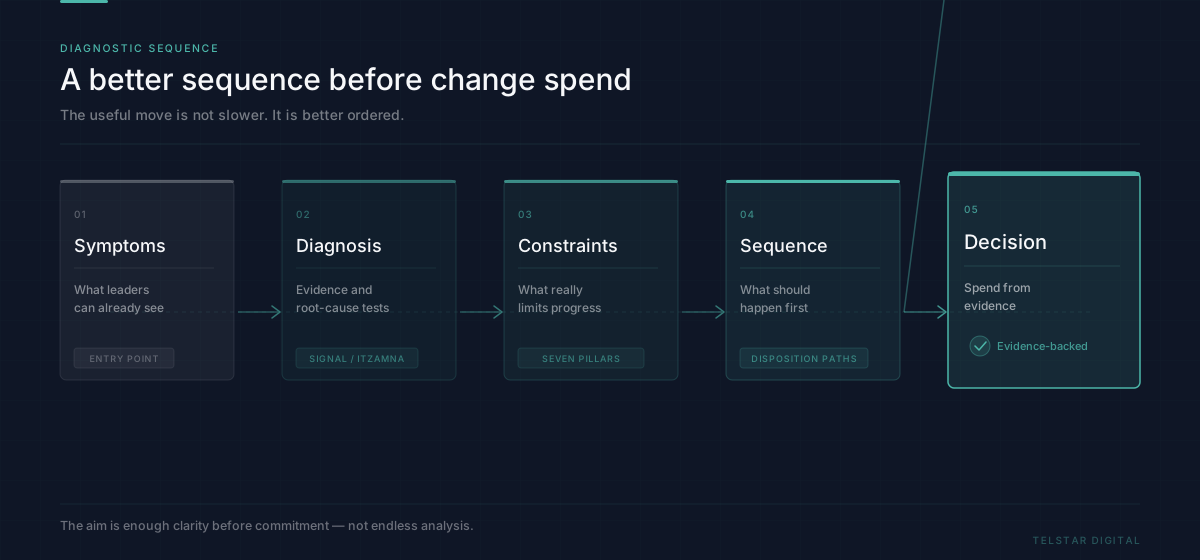
The pressure to move is real
This does not happen because leaders are careless. It happens because the pressure to move is real.
Customers are growing. Teams are stretched. Finance wants more control. Reporting is too slow. Competitors appear to be moving faster. Vendors are persuasive. AI and automation are now part of almost every strategic conversation. There is internal frustration and external noise, and both push the business toward visible action.
In that environment, solution selection can start to feel like leadership. Choosing a system, appointing a supplier, launching a programme or committing to automation creates momentum. It gives people something concrete to organise around. It also reassures the business that something is being done.
The problem is that solution selection is not diagnosis.
A business may assume the issue is that an old system has reached the end of the road, when the deeper issue is duplicated process and weak ownership. It may think it needs automation, when the bigger problem is inconsistency in how work is done across teams. It may focus on replacing software, when much of the cost and friction is actually being created by fragmented data and poor integration. It may launch a broad programme because everything feels urgent, when the real need is to sequence a smaller number of decisions more intelligently.
Without diagnosis, change becomes expensive guesswork.
Symptoms are not the same as causes
Most operational symptoms are real, but they are not always reliable guides to root cause.
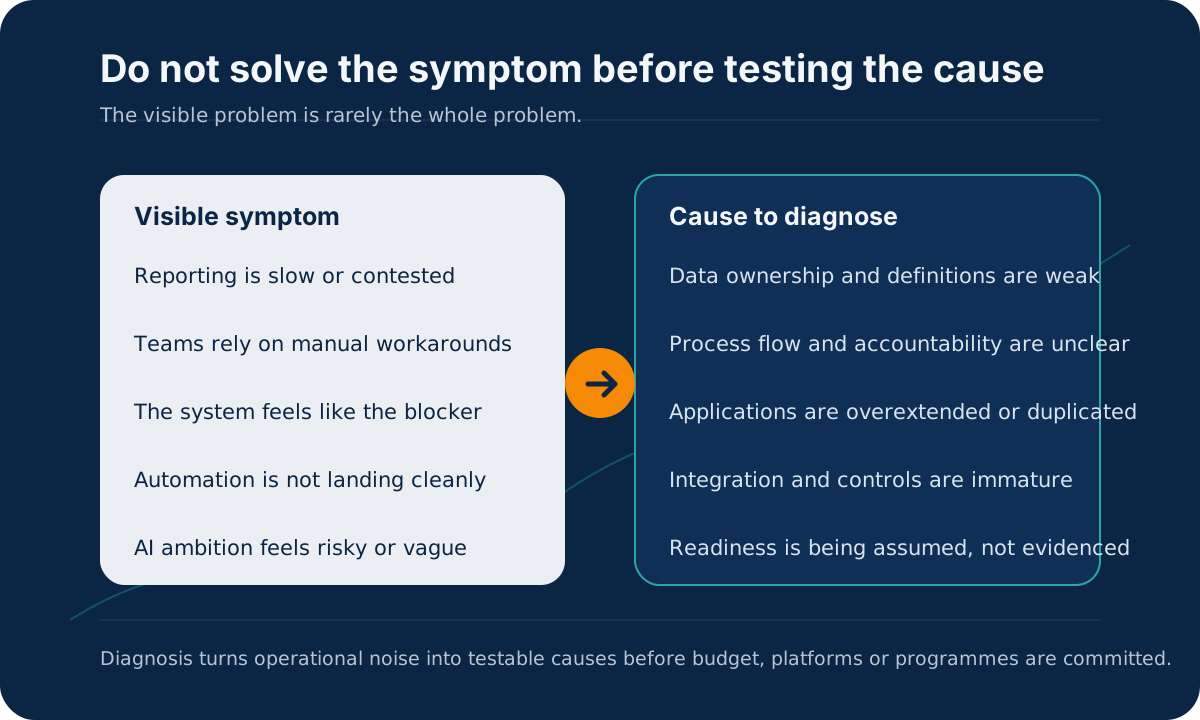
A reporting problem may look like a dashboard issue, but the cause may be inconsistent data ownership. A slow process may look like a workflow issue, but the cause may be unclear accountability between teams. A disliked application may look like the obvious target for replacement, but the real issue may be how the system has been configured, integrated or forced to support work it was never designed to handle.
This distinction matters because different causes require different responses. Replacing a system will not fix poor process ownership. Automating a workflow will not make unreliable data trustworthy. Introducing AI will not resolve unclear business logic. Adding another tool will not reduce complexity if the existing estate is already fragmented and poorly governed.
That is why diagnosis matters. Not as an academic exercise, and not as consultancy theatre, but as a practical commercial discipline. Before major change begins, the business needs a clearer view of what is happening now, where friction is really coming from, what dependencies exist, and which options are genuinely available.
The uncomfortable questions are often the useful ones. Which systems are actually creating drag, and which ones are merely inconvenient? Where does duplication exist? What is broken in the process rather than the tooling? Which issues are local, and which are structural? Where is cost rising without enough control? What would improve outcomes fastest? What should be left alone for now?
Those are the questions that create better investment decisions.
The problem is usually structural
In growing businesses, operational friction rarely sits in one neat place.
It usually appears across several connected layers of the business. Capabilities become unclear as the organisation grows. Processes drift between teams. Data definitions multiply. Applications are stretched beyond their intended role. Integrations are added tactically to keep things moving. Automation is introduced to remove effort, but sometimes accelerates inconsistency. Controls are added reactively after issues appear.
Each of these problems can seem manageable in isolation. Together, they create drag.
This is why many businesses misread the situation. They look at the system that causes the most frustration and assume that replacing it will release the constraint. Sometimes that is true. Often it is only partly true. The system may be a problem, but it may also be carrying the consequences of unclear process, weak data discipline, brittle integration, duplicated work or inconsistent control.
If the business does not map these relationships before committing spend, it risks buying a technically plausible solution to a structurally misunderstood problem.
That is when modernisation starts to disappoint. The new platform goes live, but reporting still needs reconciliation. The automation works, but exceptions multiply. The data programme begins, but ownership remains unclear. The transformation roadmap looks complete, but teams still experience the business as fragmented.
The spend was real. The movement was real. The improvement was partial.
Sequence matters as much as solution
Even when the right issues have been identified, the order of action still matters.
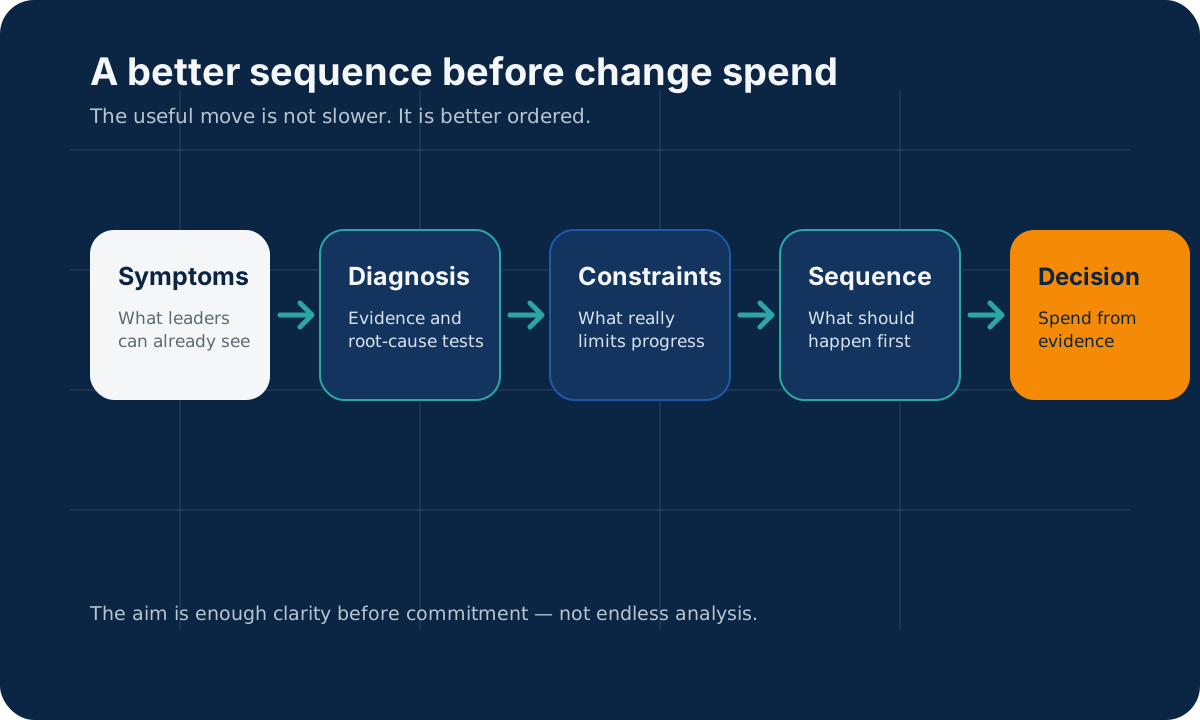
A business may need a new platform, but not before process ownership is clarified. It may need automation, but not before the workflow is stable enough to automate. It may need better reporting, but not before key data definitions are agreed. It may need AI enablement, but not before the business understands where logic, data, controls and human judgement actually sit.
This is where many change programmes lose value. They treat every issue as a parallel initiative. Replace the system. Clean the data. Improve the process. Introduce automation. Strengthen controls. Rationalise the estate. Explore AI. Each activity may be sensible, but the combined programme can become too broad, too expensive and too difficult to govern.
The better question is not simply what could be improved. Most leadership teams can answer that. The better question is what should be fixed first, what is blocked by something else, what creates confidence for later decisions, and what can safely wait.
That is the difference between a list of improvements and a credible sequence of change.
Sequencing protects capacity. It helps the business avoid funding multiple false starts. It reduces the risk of implementing a solution before the surrounding conditions can support it. It also gives leadership a more defensible basis for investment, because each step can be connected to a clear business constraint, dependency or outcome.
For growing businesses, this is not a theoretical advantage. Capacity is limited. Budget is finite. Leaders do not have the luxury of absorbing repeated change fatigue. Failed or fuzzy initiatives make future change harder because trust drops, teams become cautious, and the business starts to associate modernisation with disruption rather than progress.
The issue is rarely whether change is needed. The issue is whether the business understands what kind of change is needed, and in what order.
Clarity before commitment
The aim is not to create endless analysis before every decision. That would be just another form of waste.
The aim is to create enough clarity before commitment. Enough to understand the current reality. Enough to distinguish symptoms from causes. Enough to identify the highest-value constraints. Enough to decide whether the right next move is simplification, stabilisation, integration, automation, replacement, retirement or deeper design.
In practice, this often changes the answer.
A business that thinks it needs a replacement may discover that standardising how the existing platform is used would create faster value. A leadership team that believes it has a technology problem may find that it really has an operating model problem. A programme heading toward a large commitment may be broken into a more credible sequence of smaller, higher-confidence steps. A broad AI ambition may first need a clearer view of where process, data and control maturity are strong enough to support it.
That is not slower decision-making. It is better decision-making.
The strongest modernisation work is rarely the most dramatic. It is usually the work that starts with a sharper understanding of business reality and uses that understanding to reduce wasted spend, avoid poor sequencing, and focus effort where it will matter most.
What a better first step looks like
A better first step is diagnostic, but it should still be practical.
It should not begin with a preferred vendor, a target architecture diagram, or a long transformation roadmap. It should begin with the business itself: what leaders are trying to achieve, where work is slowing down, where systems and processes are creating friction, where data cannot be trusted, where integration is fragile, where manual work is hiding structural weakness, and where controls are not yet keeping pace with growth.
That first step should create a clearer view of the problem landscape. It should identify the most important constraints. It should separate immediate fixes from deeper structural work. It should make the trade-offs visible. It should give leadership a more confident basis for deciding what to do next.
This is the role of diagnosis in modernisation. It gives the business a structured view of reality before money and credibility are committed to change.
At Telstar Digital, this is the reason for starting with Signal, a short diagnostic entry point for businesses that know something needs to change but are not yet clear where the problem sits. Signal is not intended to replace deeper advisory work. It is designed to create an initial pattern: where the friction appears to be, which structural lenses are most relevant, and whether the business may need a more focused diagnostic conversation.
Where the issue is material, a focused Diagnostic Sprint can go further. It can examine the current operating reality across capabilities, processes, data, applications, integrations, automation and controls, then translate that evidence into a clearer sequence of action. The aim is not to produce a thick report. The aim is to help leadership decide what to fix first and why.
The method behind this is ITZAMNA: Telstar Digital’s software-enabled diagnostic approach for turning scattered symptoms into structured insight, evidence-backed findings and sequenced next steps.
Get clear first
If your business knows it needs to change but is not fully clear on what should happen first, that is not a minor gap. It is often the gap that determines whether investment creates momentum or just adds another layer of complexity.
Before you buy another system, launch another transformation programme, automate another workflow or commit to an AI initiative, get clear on the problem you are actually trying to solve.
That clarity does not remove every risk. It does something more useful. It gives the business a better basis for action.
Get clear first. Then spend.
How this article connects to diagnosis, evidence and the next practical decision.
The value of the article is in how it helps you make a better decision: what to diagnose, what to question, and what to do next.
Diagnose
Map the operating reality before money, platforms or programmes are committed.
Data
Where truth lives, whether it is trusted, and whether reporting or AI can safely depend on it.
Integrations
How information and events move between systems, teams and decision points.
Focused Diagnostic Sprint
A focused diagnostic engagement to turn symptoms, interviews and evidence into a clear next-step sequence.
Before you commit spend, map the problem.
If this feels familiar, the useful move is not another opinion or platform conversation. It is a focused diagnosis of the operating reality, the evidence behind it and the sequence of change that follows.